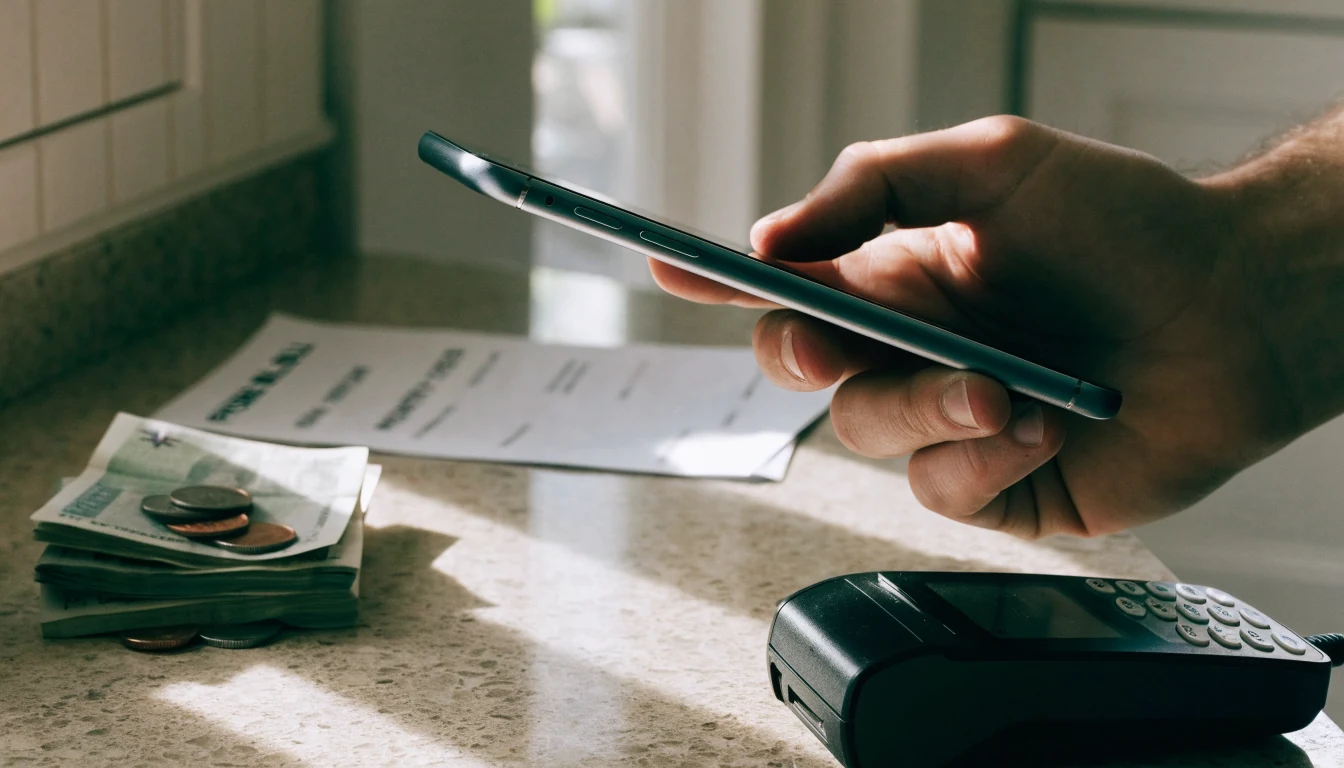
Casinos that accept e-wallets in the UK: payment guide
 Available in GB
Learn how to verify wallet availability, compare deposit and withdrawal routes, and check fees, limits and bonus conditions.

Table of Contents
- Which e-wallets can you use at UK casino sites?
- Our top casino picks for the UK
- How to check whether a payment option works at a casino
- Depositing and withdrawing: the route your money takes
- What an e-wallet payment can cost
- Choosing a payment route you can use consistently
- E-wallet payments for UK players: what is different locally?
- Deposit sizes, account limits and your first payment
- Payz and Jeton: less common wallet names you may see
- Can a wallet deposit be funded by a credit card?
- Keeping e-wallet transactions secure and predictable
Which e-wallets can you use at UK casino sites?
When you look at payment options at UK casino sites, “e-wallet” can mean a few different things. The main distinction is that a traditional e-wallet has its own account, while a bank transfer moves money through your bank and a prepaid voucher is not a reusable wallet account. Cards and phone-based payment tools sit in their own categories too, even when they make checkout feel similar.
PayPal is one of the wallet names many players recognise. A specialist review describes it as popular for speed and convenience, but also notes that an operator may exclude PayPal deposits from bonus eligibility. Treat that as a detail to check against the specific promotion, not a rule that applies everywhere. Payment terms can differ between casinos and offers.
Skrill and Neteller are other established e-wallet brands you may come across. They are listed at some casino sites, and a specialist review reports that they are often excluded from promotions. That does not make them unusable; it means the payment method and the offer may have separate conditions. If a bonus matters to you, read its terms before choosing how to pay.
A prepaid voucher is a different proposition. Paysafecard is used for deposits only, so it should not be confused with a wallet account that can also serve as a route for receiving funds. It can be useful to recognise the distinction when comparing cashier options: the word “payment method” covers products with different functions.
Then there are digital wallets built into devices. Some UK Gambling Commission-licensed casinos accept Apple Pay for deposits. Apple Pay is not the same thing as holding a separate casino wallet balance: it is a way to authorise a payment using an eligible card stored on a device. In a list of cashier methods it may appear beside e-wallet brands, but the underlying arrangement is different.
Giropay at UK Casinos: Availability and Alternatives
Cards remain a familiar alternative. UK casinos commonly accept debit cards, including Visa and Mastercard. A debit card draws on a bank account, rather than a balance held in an e-wallet. That distinction can matter when you are trying to understand what an operator means by “wallets” or “cards” in its payment menu. The labels are not interchangeable.
Bank transfers and open banking are another category you may see alongside wallets. A specialist review describes these as capable of providing instant deposits and fast withdrawals at many sites, but they are still bank-based payment routes rather than e-wallet accounts. Trustly is among the payment names you may encounter in this broader group of cashier options.
So, when you are looking at online casinos with e-wallets in the UK, do not assume that every electronic payment belongs to the same family. PayPal, Skrill and Neteller are e-wallet names; Paysafecard is a deposit-only prepaid voucher; Apple Pay is a device-based payment service; Visa and Mastercard are cards; and bank transfer or open banking uses a bank route. Clear enough once separated.
That also explains why a cashier menu can look longer than the number of genuinely distinct payment routes. A site may show a wallet brand, a card network, a bank option and a phone wallet as separate buttons. The buttons tell you what the operator presents at checkout, not that each method works in the same way or has identical features.
If you are comparing casino sites that accept e-wallets, begin with the method you already use and identify what kind of service it is. That simple step avoids treating a deposit voucher as a wallet, or assuming a card-based phone payment is an e-wallet account. The names are familiar; the categories are not always obvious.
I would not rank “best” or “top” casinos by the number of logos in a payment strip. A broad menu can be useful, but a longer list alone says little about whether a method suits your needs. Start by recognising the route, then read the relevant payment and promotion terms for the particular site. Different tools, different jobs.
DO
- Check the casino cashier for currently available methods
- Verify the payment method is available for your specific account
- Use the same name and account details for deposits and withdrawals
DON’T
- Assume a method mentioned in a review is available to you
- Rely on a general list of payment methods for confirmation
- Use a payment method that is not registered to you
Our top casino picks for the UK
- SpinFormulaBonus: 550% Up To £15,000 + 550 FS · Payout speed: 1-3 business days
- WinBeastBonus: €5000 + 500 FS + €650 Freebet · Payout speed: 1-3 business days
- DieselwinBonus: Welcome Pack 250% up to £4000 + 200 FS · Payout speed: 1-3 business days
- NightWinBonus: £900 + 400 free spins · Payout speed: 1-3 business days
- ChanzeBonus: Slots Welcome Bonus #1 200% up to €500 · Payout speed: 1-3 business days
- Revery PlayBonus: 100% up to€1,000+ 100 FS · Payout speed: 1-3 business days
- AmunbetBonus: Join now and get 450% up to 2,700 GBP + 450 FS · Payout speed: 1-3 business days
- SlotoSportBonus: 500% up to £ 10 200+ 777 FS · Payout speed: 1-3 business days
- NightLuckBonus: Welcome Pack + 805% Up To 6400€ + 280 FS · Payout speed: 1-3 business days
- ZombillionBonus: Welcome Pack 250% up to £4000 + 200 FS · Payout speed: 1-3 business days
How to check whether a payment option works at a casino
A payment logo on a casino website is a useful clue, not a promise that you can use that option. The cashier is the practical test: sign in, open the payment area and see which methods are actually offered for your account. If you are still comparing e-wallet casino sites in the UK, treat a general payment-methods page as a starting point rather than confirmation.
Availability can depend on the details of the payment method and the account you hold. A name may appear on a site while a particular card product or customer’s circumstances are not accepted. A specialist review may list Visa and Mastercard, for instance, but that does not establish that every UK customer can use every card bearing those names. Check the cashier for the options currently presented to you, and read any notes beside them.
That distinction matters with digital wallets too. A casino might describe itself as accepting e-wallets without supporting every wallet, or without showing the same selection to every customer. Do not assume that a method mentioned in a review, comparison page or old promotional material is live for your account today. Payment arrangements can change, and a page that names a method does not tell you what the cashier will display when you log in.
Apple Pay is another example of why the wording matters: some UK Gambling Commission-licensed casinos accept it for deposits, but that does not make it a universal option across UK sites. Nor should you treat an appearance in a general list as confirmation that it is available to you. Look for it in the cashier and check what the site says it can be used for.
When you check, make sure you are looking at the UK version of the site and are signed in to the account you intend to use. A page aimed at another market, or a list written for a broad audience, may show payment methods that do not match your own cashier. If the option is missing, do not try to infer that it will work from a logo elsewhere on the site. Ask customer support to confirm whether it is currently available to your account.
Casinos That Accept iDEAL in the UK: What to Check
It helps to be precise in that message. Name the payment option, say that you are a UK customer, and ask whether it is available for your account and for the kind of payment you intend to make. If you are checking a card, identify the relevant card product rather than relying on the Visa or Mastercard name alone. If you are checking a wallet, ask about that wallet by name. A broad question such as “Do you take e-wallets?” can produce a broad answer that still leaves you unsure.
Also separate “accepted” from “available for this use”. A method shown in a casino’s general payment information may not be offered for every transaction type. Read the cashier labels and any terms linked from that screen; if the wording is unclear, ask support to spell out what the option supports before you proceed. Do not assume that a deposit option can also be used for withdrawals. Confirm both separately if you need the same method in both directions.
I would keep a note of what you checked and when, especially if the site’s public information and your cashier do not match. A screenshot of the cashier can help you explain the issue to support, but it is not a substitute for confirmation if the option is unavailable or the terms are unclear. If support gives you an answer that conflicts with what your account shows, ask them to clarify the difference rather than making a payment on a guess.
This is a better way to assess an e-wallet online casino in the UK than relying on a “best” or “top” label. Those labels do not establish compatibility, and a long e-wallet casino list can still be out of date or too general to answer your account-specific question. The same applies when you see a method mentioned in a review: use it as a lead, then verify it at the casino itself.
Casinos That Accept Revolut in the UK: Payment Guide
The check is simple: identify the exact method, open the UK cashier while signed in, and confirm that the option is displayed for the use you have in mind. If it is not, ask the operator before proceeding. Logos are not confirmation.
Depositing and withdrawing: the route your money takes
A deposit and a withdrawal may use the same e-wallet, but they are not simply the same transaction in reverse. When you deposit, you choose a payment option in the casino cashier and authorise money to move from your wallet into your gambling account. A withdrawal starts inside the casino: you request payment, the casino reviews it, then sends approved funds through an available payout route.
That distinction matters when you compare casino sites that accept e-wallet deposits. Seeing a wallet listed for deposits does not, by itself, tell you how winnings will be paid. The cashier’s withdrawal options and the operator’s payment terms are the useful places to check before you begin. Deposit and payout routes can differ, and the operator may apply closed-loop rules to the funds.
For a wallet deposit, you are generally passed to the wallet provider to sign in and approve the payment. The casino then credits your gambling balance once the payment is completed and recognised. Keep the confirmation from both sides if the balance does not update as expected: it helps you explain whether the payment left the wallet, reached the casino, or is still being processed.
A withdrawal runs through more steps. You submit a request in the casino account, and the casino first has to approve it. UK anti-money laundering requirements generally mean that funds are returned to the original payment source. So, if you funded your account with an e-wallet, the casino may route a payout back to that wallet, subject to its rules and the details of your transaction. This is one reason not to assume you can choose an unrelated destination simply because it is convenient.
Casinos That Accept Ukash in the UK: Payment Checks
The first withdrawal can take longer than later ones. A specialist casino review describes the extra time that may be needed for verification on an initial payout; that is a point to check against the operator’s current terms, not a fixed timetable for every account. The casino may need to complete KYC before releasing funds. If it asks for information or documents, respond through the account’s secure verification process and make sure the details match those used to register and pay.
Even after you submit a request, the money may not be on its way to your wallet yet. The operator’s internal review comes first. A specialist review also notes that payout speed depends on this approval process and on whether the account is fully verified. Once the casino releases the payment, the wallet provider’s part of the transfer follows. These are separate stages, so a request marked as pending is not necessarily a wallet delay.
If a withdrawal seems stuck, check its status in your casino account before sending another request. Look for a message asking for verification or further information, and check the operator’s stated processing procedure. If the casino says it has sent the funds, ask the wallet provider whether the payment is visible on its side. Keep the transaction reference and any correspondence; they make it easier to trace the same payment across both services.
The sensible approach is to think of the deposit as money entering the casino and the withdrawal as a reviewed payment leaving it. The wallet may appear in both parts of the process, but approval and verification sit between them. That is the route.
What an e-wallet payment can cost
The fee shown beside a deposit is only one part of the cost. A specialist review of casino payment methods identifies several possible charges: a casino fee, a fee from the wallet provider, a fee from your bank or card issuer, currency conversion, and network costs. Which ones apply depends on the transaction and the accounts involved, so I compare the whole route rather than looking for a single “free” label.
Start with the casino’s cashier terms. Check whether it charges for the particular payment method, then look at the wallet provider’s own fee information for deposits, withdrawals or currency conversion. Your bank or card issuer may also have charges of its own. A payment can therefore have no visible casino fee and still cost you elsewhere.
Casinos That Accept eCheck in the UK: What to Check
Currency is the part that is easy to miss. If your casino balance and wallet balance are not in the same currency, conversion may happen somewhere along the route. Check which account sets the exchange rate and whether the displayed rate includes a margin. A specialist review notes that the conversion spread can cost more than a clearly stated flat fee. The headline charge is not always the expensive bit.
For a fair comparison, use the same intended amount and currency for each option. Write down what would leave your wallet, what would reach the casino balance, and any separate fee disclosed by the provider or bank. If the casino displays a GBP balance but your wallet uses another currency, check how the conversion is calculated before confirming. A rate that looks close to the market rate can still include a spread; compare the actual amount credited, not just the rate shown on a screen.
Then check whether a fee is fixed, percentage-based, or both. A fixed charge has a different effect on a small transaction than on a larger one, while a percentage charge changes with the amount. Don’t assume a fee listed for one kind of transaction also applies to another: the provider’s terms may distinguish between funding, conversion and other account activity. Read the relevant entry, not just the general fee summary.
The same comparison matters if you are looking at a withdrawal. A payment route can have different terms depending on whether money is going into or out of the account. Include any provider or bank charge and any conversion cost in your notes; otherwise, two options that appear similar at deposit stage may not have the same overall cost. Keep the comparison to the transaction you actually intend to make, rather than treating a general fee table as a quote.
Casinos That Accept Tether in the UK: What to Check
There is no payment method that can be called the cheapest for everyone. A specialist review of payment costs advises comparing casino charges, provider fees, currency spread and network costs against the actual transaction. That is a more useful test than choosing an e-wallet because its name is familiar or because one fee is absent. I would keep the arithmetic simple: total the charges you can identify, compare the amount credited or received, and check the currency before you approve anything. A little reading beats a surprise deduction.
Choosing a payment route you can use consistently
When you choose a casino payment method, look beyond whether it appears in the cashier. The useful question is whether the account and payment route are both yours and can be used in a straightforward, consistent way. That can help avoid delays caused by basic ownership details not lining up.
I would start with the name and account details you use with the casino. If you deposit from an e-wallet registered to you, the details should make it clear that you are the person behind both accounts. A wallet belonging to someone else, or a mismatch in account information, can turn a routine transaction into one that needs explaining. That is avoidable friction.
The cleanest arrangement is often one named payment account used consistently for deposits and withdrawals. It gives you a simple record of where funds came from and where a payout should go. It also makes it easier to describe the route if the casino asks you to clarify a transaction. Straightforward is good. Paperwork is less fun.
Before making a deposit, check that you can keep using the same account rather than switching between payment details without a clear reason. If you have more than one wallet or bank account, pick one that belongs to you and keep its details current. Consistency does not mean every payment will be handled identically, but it removes some basic questions about who owns the accounts involved.
A casino may return funds to the original payment source as part of its anti-fraud and money-laundering controls. If you ask for a different payout route, the casino may need additional verification before it can proceed. That is why it is sensible to think about the likely withdrawal path before you deposit, rather than treating the payment choice as a one-way decision.
Smart Payments
Always use the same account for deposits and withdrawals to ensure a consistent ownership trail.
Keep a record of which account you used. This need not be elaborate: knowing the wallet or bank account involved can help you check your own transaction history and answer a question accurately if one comes up. Avoid using someone else’s payment details, even with permission. The casino needs to establish that the customer and the payment account belong together; a friend’s approval does not make the account yours.
A consistent route is not a promise that a transaction will be approved without checks, nor does it override the casino’s procedures. It simply reduces the chance of preventable confusion over ownership. If your circumstances change and you need to use a different account, contact the casino first and ask what it requires. A clear explanation before you switch is easier than sorting out a mismatch afterwards.
E-wallet payments for UK players: what is different locally?
The main local boundary is not about which wallet has the neatest app. It is about the money behind the payment. In Britain, remote gambling licensees cannot accept credit-card payments for gambling, and that restriction also matters when a wallet is involved.
The ban took effect on 14 April 2020 and has not been relaxed. So a wallet is not a workaround for a credit card: if its payment setup would let credit-card funds be used for gambling, a UK-licensed casino cannot accept that wallet payment. The method may look different at the cashier, but the funding source still matters.
That is one point I would keep in mind when looking at e-wallet casinos for UK players. A wallet balance funded from an allowed source is not the same thing as credit-card money routed through a wallet. The restriction is about credit-card payments for gambling, including payments routed through a money service business.
There is a separate distinction between credit and debit cards. UK casinos commonly accept debit cards, including Visa and Mastercard, but that does not make every card product eligible. The relevant question is whether the payment is a prohibited credit-card payment, not simply whether a familiar card brand appears on screen.
POLi Casinos in the UK: Check Current Availability
For e-wallet casinos in the UK, this makes the funding route part of the local rules, rather than a minor account preference. Don’t assume that a wallet accepted for one kind of purchase can be used for gambling with any source of funds. Check the wallet’s funding arrangements and the casino’s payment terms before you try to pay.
If you are using a UK-licensed site, the operator must follow the credit-card restriction. That is a firm boundary, not a temporary cashier setting. The wallet label does not change it.
Deposit sizes, account limits and your first payment
Before you fund an account, separate three things: the minimum a cashier will accept, the maximum a payment route permits, and the financial limit you set for your own account. They affect different parts of the decision.
A specialist casino review puts minimum deposits in the £10–£20 range, with the amount depending on the payment method. Treat that as a guide from that review, not a fixed rule for every casino. The cashier’s current terms are what matter for the account you are opening: the minimum shown for an e-wallet may not match the one shown for a card or bank transfer.
Maximum deposits can also be set at different levels. A payment method may have a per-transaction ceiling, while the casino may apply separate daily or monthly limits. Those caps can vary with the route you select and your account status, so the figure displayed for another customer—or on a general information page—may not apply to you. Check the amount in your own cashier before deciding how much to send. Small detail, worth checking.
There is a separate UK requirement at account level. Remote gambling operators must prompt new customers to set a financial limit before they make their first deposit, and they must make account-level limit controls accessible. This is not the same as a payment method’s minimum or maximum: one concerns how you manage your gambling account, while the others govern the transaction the cashier can accept.
Casinos that accept USDC in the UK: what to check
I would decide on the account limit before choosing a deposit amount, rather than treating the cashier’s maximum as a sensible target. A high transaction cap tells you what the route might allow, not what suits your budget. Keep the amount you plan to deposit within the limit you have set, and take a moment to read what the control applies to in that casino’s account settings.
If you are comparing casino sites that take e-wallet deposits, the useful comparison here is not a “best” label. Look at the minimum shown for your chosen wallet, the applicable transaction caps and the account controls available to you. Those details can change between casinos and payment routes, so confirm them in the cashier and your account before making the first payment.
Payz and Jeton: less common wallet names you may see
Payz may look unfamiliar if you remember the name EcoPayz. The service changed its name in 2022, so older casino pages or saved payment notes may still use the previous label. If you see EcoPayz in older material, it refers to the service now called Payz; it is not a separate wallet you need to search for.
Jeton is a different case. A specialist review reports that it remains available at a handful of UK online casinos in 2026. That makes it a name you may encounter, but not one to assume you will find in every cashier. The number of sites mentioned is limited, and payment menus can change, so a general list is no substitute for what appears in your own account.
When you are comparing e-wallet casinos in the UK, these names can be easy to misread. Payz’s former name can make a current option seem like two separate services, while Jeton’s presence on one casino’s payment page does not establish that another accepts it. Keep the distinction simple: EcoPayz is the old name for Payz; Jeton is a separate option with limited reported availability.
I would not choose a casino on the strength of either name appearing in an old review or a third-party payment list. Treat those references as a starting point, not a promise. A short check of the current cashier is more useful than relying on a page that may have been written before a payment option changed.
Brand Note
Payz is the new name for the service formerly known as EcoPayz.
If you have used EcoPayz before, look for Payz rather than expecting the old branding. If you are looking for Jeton, expect to find it only at a small number of UK sites, according to that specialist review. Less familiar names need a little more checking.
Can a wallet deposit be funded by a credit card?
No. In the UK, a wallet cannot be used as a workaround for a credit-card payment for gambling. The ban covers the funding route as well as the casino’s direct card option: remote gambling operators cannot accept wallet payments if credit-card funds would be used for gambling.
The regulator introduced the credit-card gambling ban on 14 April 2020, and it has not been relaxed. So if you are asking whether you can use an e-wallet for an online casino deposit, the key point is where the wallet balance comes from. A wallet funded from a credit card is not an acceptable route for that payment.
That does not mean every e-wallet deposit is prohibited. The restriction is about credit-card funds being used for gambling; it does not rule out a wallet payment funded through another permitted source. The casino and wallet provider may apply checks or controls to prevent a prohibited payment from going through. Don’t try to get around a declined transaction by moving the same credit-card money through another service.
It is also worth keeping the card types distinct. A debit card draws on money in your bank account; a credit card borrows against a credit facility. The UK restriction concerns credit-card payments for gambling, not every payment card or every wallet balance.
If you are unsure how a particular wallet is funded, check its funding record and the casino’s payment rules before depositing. A wallet balance can contain money from different sources, so the name of the payment method alone does not settle the question. Use only funds that are not being routed from a credit card for gambling. No detours.
Keeping e-wallet transactions secure and predictable
When you use an e-wallet at a UK casino, the name on the wallet account should belong to you. That is more than a tidy bit of account setup: it helps the casino check who supplied the funds and who should receive them.
UK anti-money laundering rules generally mean a payout must go back to the original payment source. Returning money that way is also a common anti-fraud safeguard. It makes it harder for someone to use a casino account to move funds through another person’s wallet or payment account. Closed-loop rules can feel rigid, but they serve a clear purpose.
I’d keep the details consistent from the start. Use your own casino account and your own e-wallet, with matching ownership information. If a casino cannot establish that the payment account belongs to you, a transaction may need further review. The same can apply if you ask for a payout through a different method rather than the one used to fund the account.
An alternative route is not automatically a problem, but expect the casino to ask for additional verification before approving it. That may mean confirming account ownership or providing information that links you to the payment method. Keep any requested details accurate and respond through the casino’s official account or support channels.
This is why changing payment details at the point of payout can create friction. Before making a deposit, check that the wallet is yours and that you can continue using it if funds need to be returned there. If your access to that wallet changes, contact the casino before choosing another payout route; don’t assume a replacement account will be accepted without checks.
A straightforward ownership trail helps protect you and the casino. Keep it boring.
Can I use a credit card at 333 Casino in Great Britain?
No. Credit card gambling has been banned by the UK regulator since 14 April 2020.
What is the fastest withdrawal method for UK casinos?
PayPal, open banking and debit cards linked to fast payout systems are generally among the quickest. The casino’s approval process and whether your account is fully verified also affect the time.
Are Visa and Mastercard deposits definitely debit cards?
No. Visa and Mastercard are card networks, and their logos do not confirm that every card product is a debit card or eligible. Check the cashier for the options available to you.
Created by the "Casino not on Gamstop" editorial team.