How to check a gambling site before opening an account
 Available in GB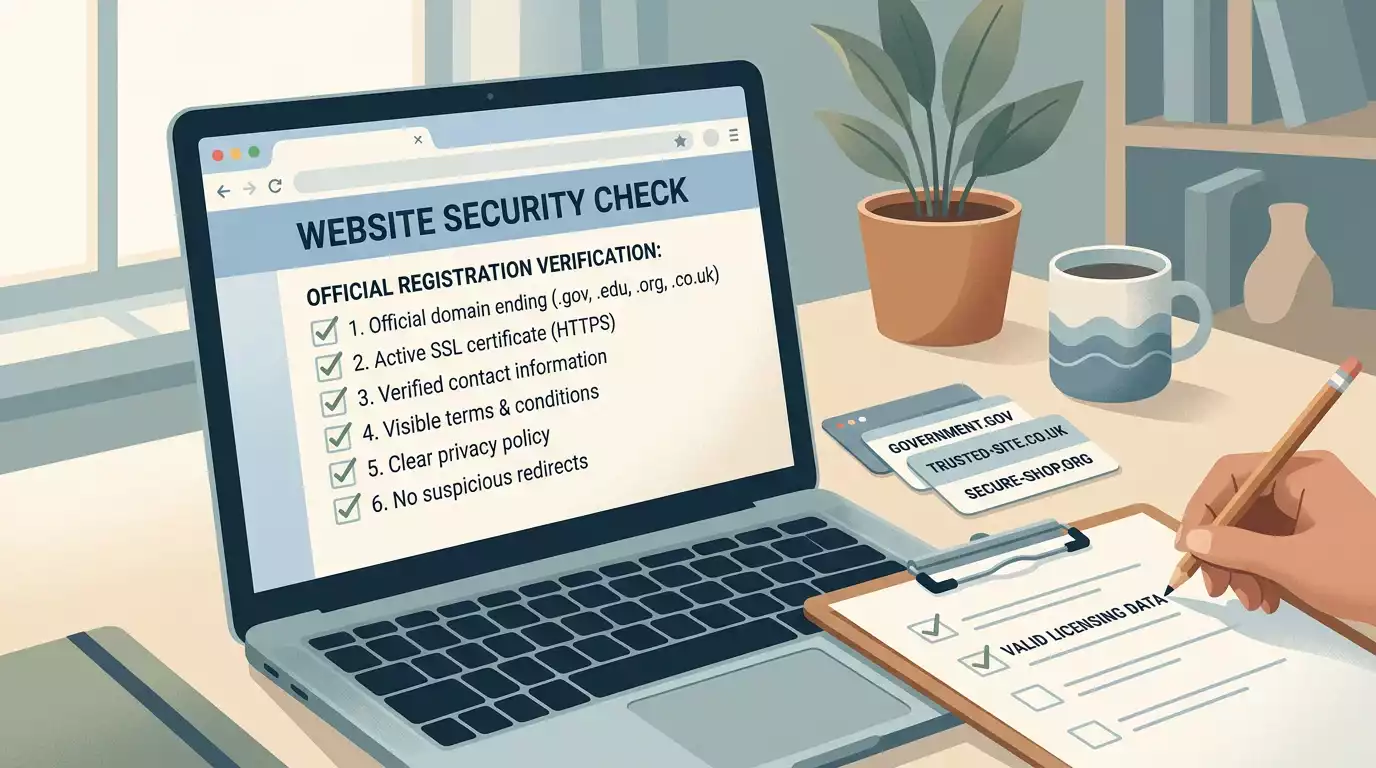
Table of Contents
- Start with the exact site you are viewing
- Use the public register as a filter, not a stamp of approval
- Before opening an account: what to check and where to check it
- Read the account information before you send documents
- Stop signs that should not be ignored
- What a completed check still cannot promise
- Where this fits with payment and complaint issues
Start with the exact site you are viewing
Do not check a brand impression. Check the exact website address, the legal or trading name shown in the footer or terms, and any licence details the site displays. Small differences matter. A similar name, a different domain ending, a copied logo, or a vague claim about accepting UK players is not enough. The official register check only helps if you compare the details in front of you with the details recorded there.
Write down three things before you open any register page: the domain name, the business or trading name, and the activity the site is offering, such as online casino games. If the site will not show those details clearly before account opening, that is already useful information. A business asking for money while hiding basic identity details is asking you to trust a blank space.
Use the public register as a filter, not a stamp of approval
On the Gambling Commission public register, look for the business and compare the record with the site you are considering. The practical items are licence status, domain names, trading names, permitted activities and any visible regulatory actions or warnings. A register entry is not a promise that the site is enjoyable, generous, fast or problem-free. It is a way to see whether the public details match and whether the business appears inside the British licensing framework.
Pay attention to the word “active” or any status language shown by the register. Check that the domain you are using is actually listed or otherwise tied clearly to the business. Check whether the activity described on the site matches the activity covered. If a site offers online casino games but the information you can verify does not support that activity, do not treat the gap as a small technical detail.
The regulator also says a GB-facing gambling business without a Gambling Commission licence is acting illegally. That statement is not a substitute for legal advice about every foreign website, but it is enough to show why a British reader should not rely on a site’s own sales wording. If a site aims at you as a British consumer, the official licensing position matters before you deposit.
Before opening an account: what to check and where to check it
| Check | Why it matters | Official place to verify | What not to assume |
|---|---|---|---|
| Licence status and business details | Shows whether the business appears within the Gambling Commission framework for Great Britain. | Gambling Commission public register. | Do not assume a logo or licence number shown on a site is current. |
| Domain name and trading name match | Helps prevent confusion between a real business, a similar brand name and an unrelated website. | Register record and the site’s own terms or footer. | Do not assume similar names belong to the same operator. |
| Activities covered by the licence | The licence should fit what the site offers, such as remote casino activity. | Register activity details. | Do not assume a licence for one activity covers every gambling product. |
| Regulatory actions or warnings | Visible actions can change how you judge risk before opening an account. | Public register and Gambling Commission consumer pages. | Do not assume the absence of a warning means there will be no problems. |
| Fees, terms and bonus restrictions | Account charges, withdrawal conditions and offer terms affect your own money. | Account-opening information and terms shown before registration. | Do not assume a headline offer explains the real conditions. |
| Customer-fund protection level | Gambling balances are not protected like money in a personal bank account. | Customer-funds wording required in account information. | Do not assume a separate account guarantees repayment if a business fails. |
Read the account information before you send documents
Public guidance says gambling businesses must give clear information before an account is opened, including licensed status, fees, how customer funds are protected, details about offers, and relevant terms. This is not paperwork to skim after a deposit. It is the information that tells you what the business says it can do with your account, your balance, your bonus, your verification request and your withdrawal.
Look for plain explanations. Can you see whether account fees can apply? Can you understand what happens to a balance if the business has financial trouble? Are bonus restrictions visible before you opt in? Is the complaint route explained? Is there a way to identify the legal business behind the website? If the answer is no, do not soften the problem by assuming the information will appear later. A site that is unclear before receiving money may be harder to deal with after receiving money.
Stop signs that should not be ignored
- The site uses broad claims about UK access but does not show a clear Gambling Commission licence for the relevant business.
- The domain you are using does not match the official details you can verify.
- The terms are missing, vague, hard to find, or available only after registration.
- The site asks for payment or identity documents before showing basic account rules.
- Bonus wording is louder than the restrictions that control withdrawals.
- The customer-fund protection wording is absent or written as if balances are bank-protected.
- The site presents fewer checks as a benefit rather than explaining how age, identity and money controls work.
Any one of these signs is enough to pause. You do not need to prove that a site is bad before deciding not to use it. For a consumer, uncertainty is a practical reason to stop, especially where money, identity documents and gambling pressure are involved.
What a completed check still cannot promise
Even a clear register match does not guarantee a perfect experience. It does not promise quick withdrawals, fair bonus wording in every situation, no account review, no affordability or financial questions, no technical issue, or a particular dispute outcome. The point of the check is narrower: it helps you reject sites that fail basic verification and helps you understand the framework before you accept risk.
That narrower purpose matters. A guide that names “approved” places to gamble would push you toward operators. A useful check keeps the decision with you and keeps the burden on verifiable information. If you cannot verify the business, terms and protections, the decision is simple. Do not open the account.
Where this fits with payment and complaint issues
Licence and term checks happen before account opening. They do not replace later checks about payment rules, age and identity verification, withdrawal restrictions or complaints. Before sharing payment details or documents, read the separate guide on payments, ID checks and withdrawals. If a dispute has already happened, use the guide on complaints, ADR and personal data concerns. If you are here because a self-exclusion or block is stopping gambling, the more relevant next step is support around self-exclusion.
- Understand what “not on Gamstop” means
- Check payment, ID and withdrawal issues
- Deal with complaints and data concerns
How to check a gambling site before opening an account — More on this topic at casino not on gamstop.
See also If “not on Gamstop” is connected to self-exclusion or loss of control.
Created by the "Casino not on Gamstop" editorial team.