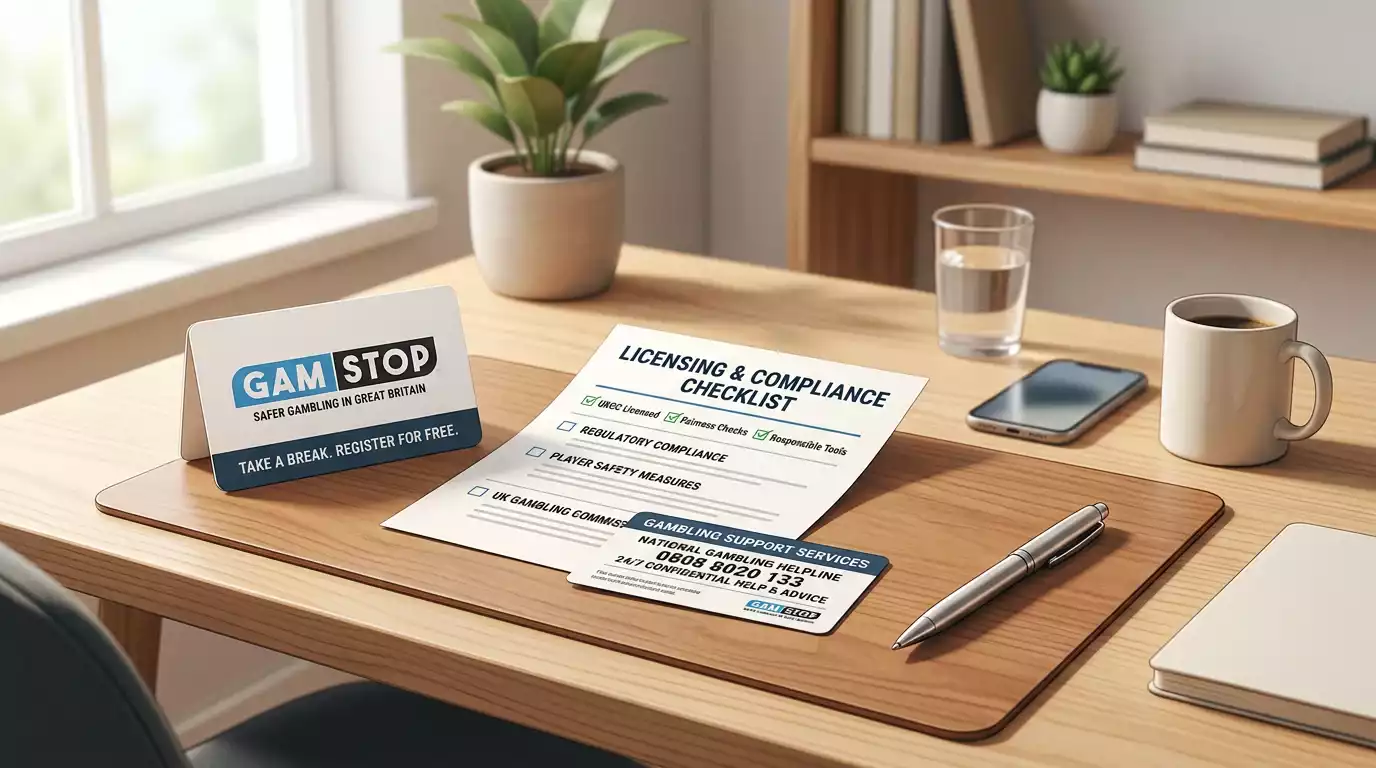
If “not on Gamstop” is connected to self-exclusion or loss of control
 Available in GB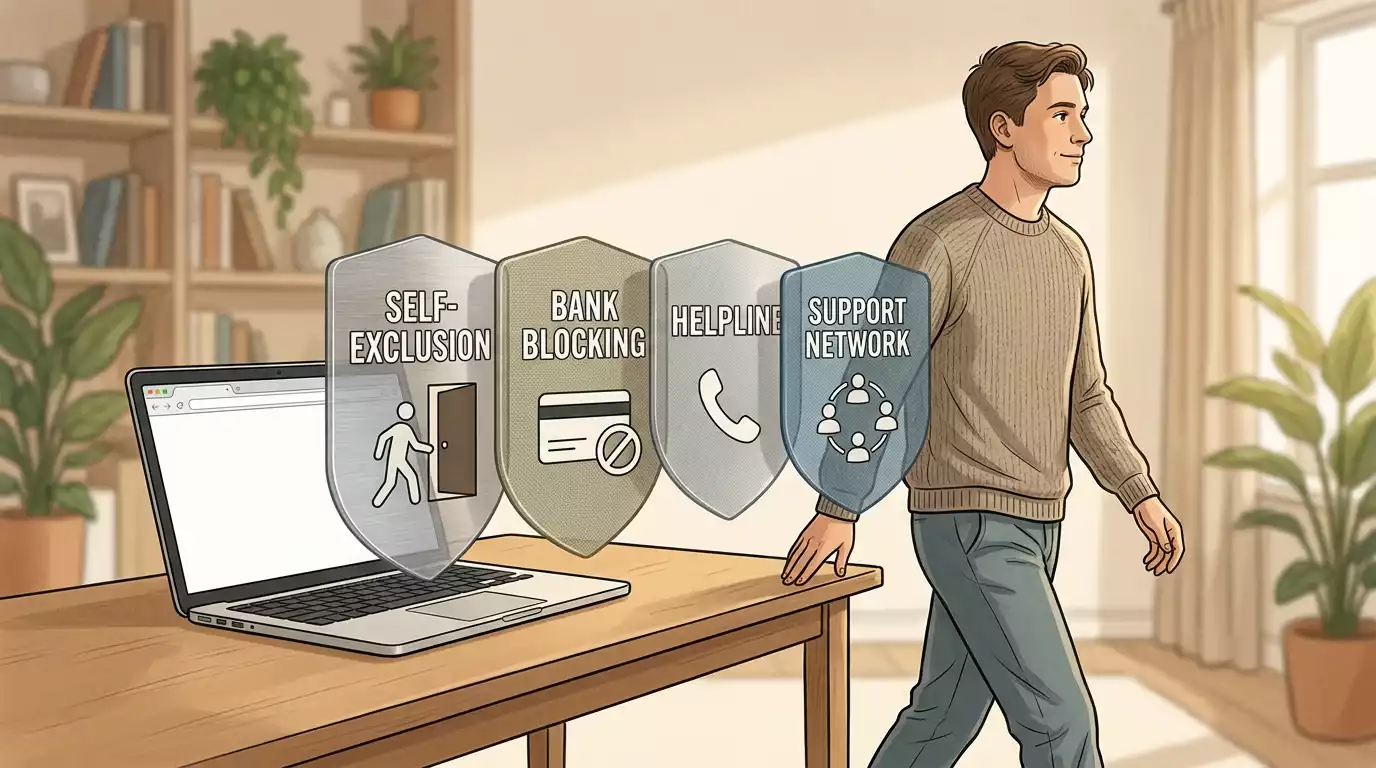
Table of Contents
Use the urge as a warning signal, not a plan
Looking for a site outside GAMSTOP can be a sign that a protection is doing its job. Self-exclusion, bank gambling blocks, blocking software and account limits are not personal failures. They are tools designed for the moment when willpower alone may not be enough. If you are trying to gamble because you feel stressed, angry, ashamed, bored, desperate to recover losses, or afraid of missing a chance, the urgency itself is useful information.
Delay helps. A decision made ten minutes later can be very different from a decision made while a payment screen is open. Close the site, move away from the device, and contact someone before money leaves your account. That may sound simple, but simple actions matter when the risky part of the decision is speed.
If you are registered with GAMSTOP
GAMSTOP is a UK self-exclusion service for people living in the United Kingdom. It blocks access to online gambling companies licensed in Great Britain for the exclusion period chosen by the person who registered. It is not a worldwide internet filter, and it is not a complaint service, but it is an important protection tool within its scope.
If you are registered, keep your details current with GAMSTOP and use its official contact route if your information needs updating. Do not treat a mismatch of details, a different device, or a site outside the scheme as a reason to gamble. If the urge to continue is strong, the safer response is to add help around the exclusion rather than relying on the exclusion alone.
- Keep contact details and identity details up to date with GAMSTOP, so matching works as intended.
- Ask your bank about gambling transaction blocks if you have not already used them.
- Consider blocking software as another layer, especially if most risky moments happen online.
- Tell one trusted person that you are trying to pause gambling, so the situation is less private and less immediate.
- Contact a gambling support service before opening another account or making another deposit.
What to do instead of looking for a new route to gamble
| What is happening | Safer next step | Why it helps |
|---|---|---|
| I am registered with GAMSTOP and want to gamble now. | Stop the account search and contact GamCare or the National Gambling Helpline. | It moves the moment from access to support while the urge is active. |
| A bank gambling block stopped a payment. | Leave the block in place and use the pause to speak to someone. | The block protects money at the exact point where speed can cause harm. |
| I am chasing losses. | Do not deposit again to recover them; write down what has already been spent and move to support or money guidance. | Chasing losses can make the financial position worse even when it feels like the fastest fix. |
| I borrowed money or used money needed for bills. | Pause gambling decisions and seek gambling support plus money guidance. | The priority becomes protecting essential spending and reducing pressure. |
| I feel unsafe, trapped or at risk of self-harm. | Use urgent NHS, Samaritans, PAPYRUS or emergency routes according to the risk. | A crisis needs immediate human support, not a gambling decision. |
Support routes you can use now
The services below are official or recognised support routes for gambling pressure, distress, debt, self-exclusion difficulty or safety concerns. They are not gambling operators and they do not decide account disputes. Use them when getting help matters more than finding another site.
| Situation | Contact or route | Use it for |
|---|---|---|
| Gambling feels hard to stop, or you are worried about someone else. | National Gambling Helpline / GamCare: 0808 8020 133, available 24 hours a day, every day of the year. GamCare also offers online support routes. | Gambling harm support, talking through urges, and practical next steps. |
| You are in Wales and want Wales-specific gambling support. | All Wales Gambling Treatment Service 24/7 helpline: 0808 281 9265. | Wales gambling-related harm support and treatment access. |
| You need urgent mental-health help but life is not in immediate danger. | NHS 111 online or call 111 and choose the mental health option where available. | Urgent mental-health support and next-step guidance. |
| You need to talk to someone about emotional crisis or suicidal thoughts. | Samaritans: 116 123, free from any phone, open 24 hours a day. | Listening support at any time, including night-time crisis moments. |
| A young person is experiencing suicidal thoughts, or someone is worried about a young person. | PAPYRUS HOPELINE247: 0300 102 2470, text HOPE to 88247, or email [email protected]. | Suicide prevention support for young people and concerned others. |
| Someone’s life is at risk, or you cannot keep yourself or someone else safe. | Call 999 or go to A&E. | Immediate emergency help. |
Add layers that make the risky moment harder
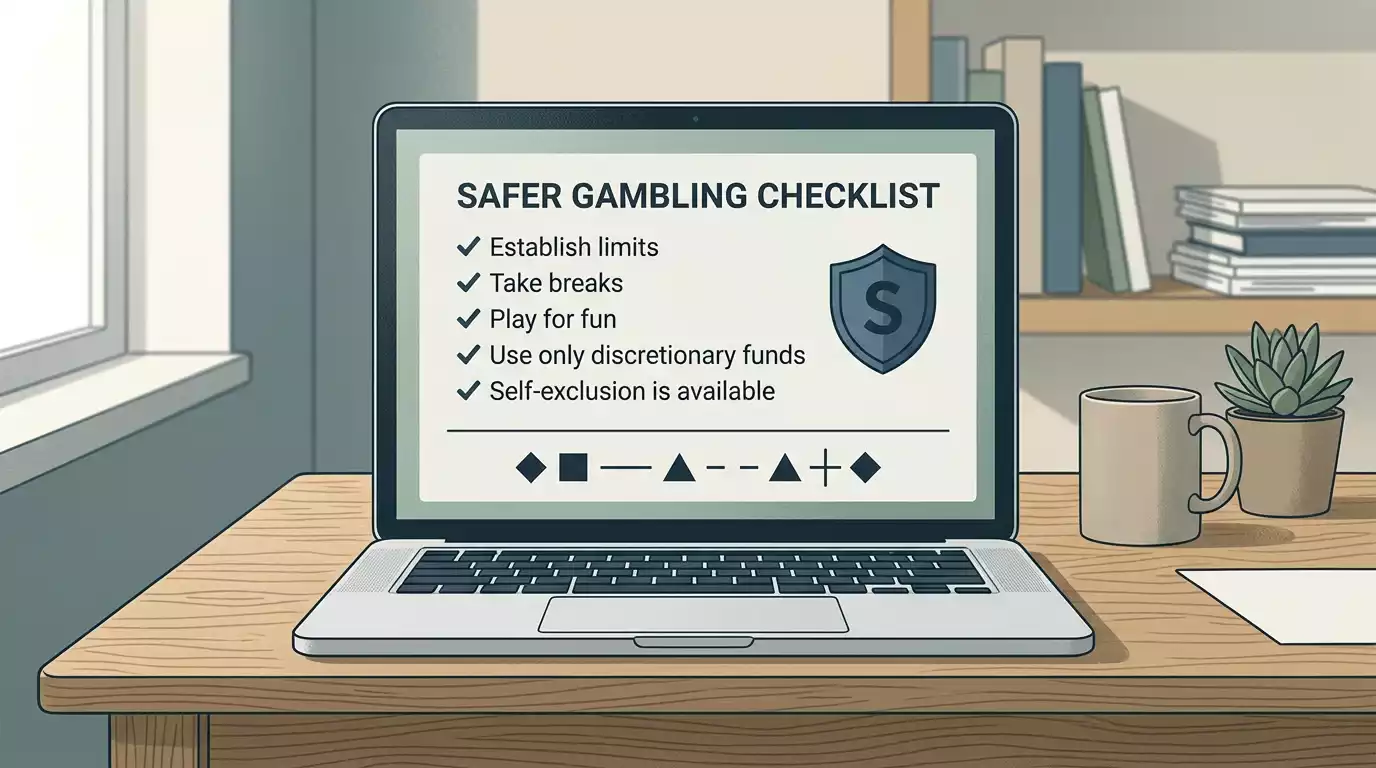
One protection is useful; several protections are stronger. GAMSTOP can cover online gambling companies licensed in Great Britain. Bank blocks can interrupt gambling transactions. Blocking software can add friction on devices. Support from another person can reduce secrecy. Money guidance can help when the pressure is debt or bills rather than only the urge to gamble.
The point is not to create a perfect wall. The point is to create enough time between the urge and the deposit for a different action to become possible. If a block has already stopped you once, that is evidence that the layer is useful. Keep it. Add another layer if the urge is still finding gaps.
- Keep GAMSTOP active and update details through the official route when needed.
- Ask your bank what gambling transaction blocks are available on your account.
- Use blocking software on the device where most gambling urges happen.
- Move spare money away from instant access if doing so is safe and practical for you.
- Tell a trusted person the specific time of day when you are most likely to gamble.
- Use the helpline before, not after, another deposit.
A 30-minute plan when the urge is active
When gambling feels urgent, a long plan can be too much. Use a short one. First, close the gambling page or app and leave the device in another room. Second, write the amount you were about to deposit on paper and mark whether it is needed for rent, food, bills, debt, family or savings. Third, call or message a support route or trusted person. Fourth, keep protective blocks in place for the rest of the day. Fifth, do one ordinary task that changes your body state: walk, shower, eat, or sit somewhere away from the payment screen.
None of this has to be perfect. The aim is to break the chain between pressure and payment. If the first thirty minutes pass without a deposit, that is a meaningful result. You can then make a second short plan for the next hour.
If there is also a complaint or missing money
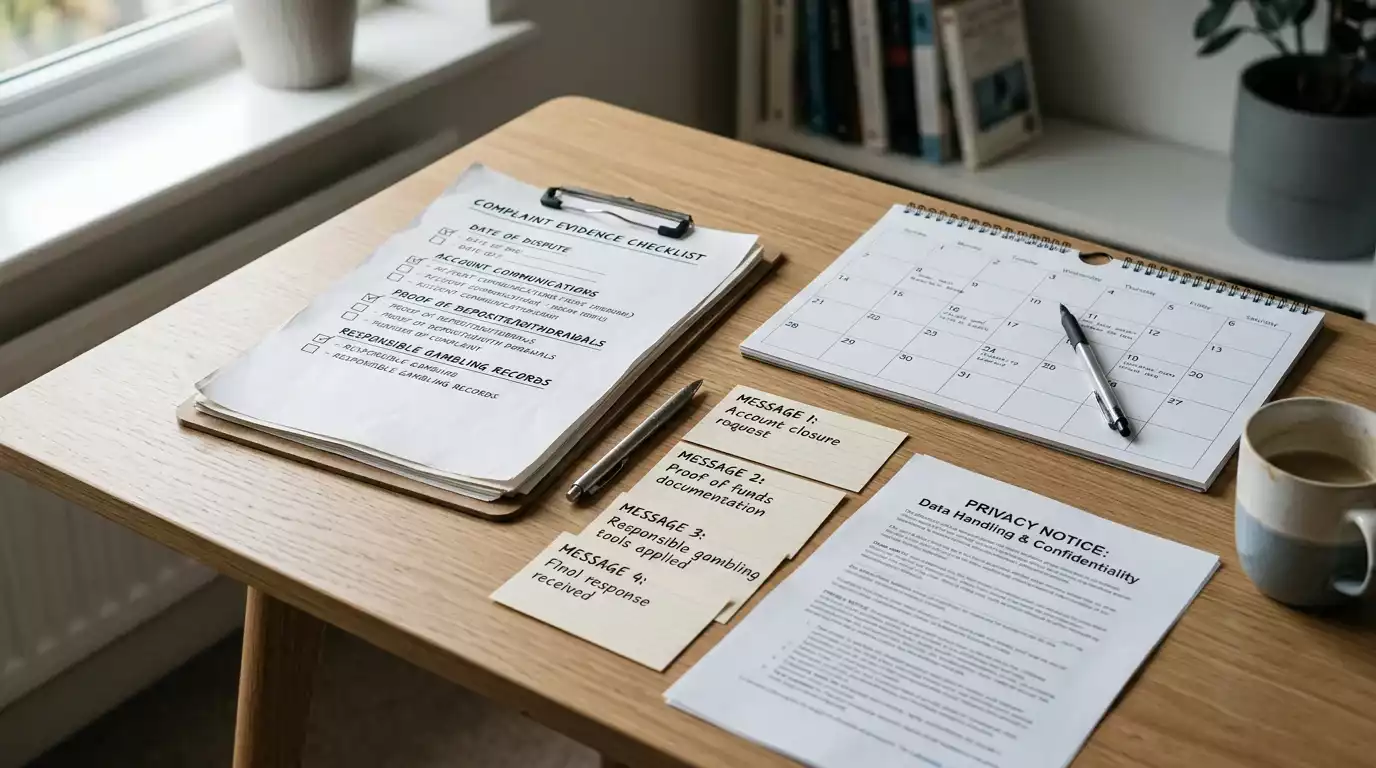
Support and complaints can run in parallel. If a withdrawal is delayed, a term is unclear, or personal information has been mishandled, keep the evidence and use the complaint route. But do not wait for a dispute to end before getting help if gambling has become hard to control. A complaint may take time. Gambling support is there for the pressure you are feeling now.
If you need the practical complaint route, use the related guide on complaints, ADR and personal data concerns. If your question is mainly about payments, identity checks or withdrawals before a dispute has started, read the payments guide. If you only need to understand the phrase “casino not on Gamstop”, start with the meaning page. Keep this page for moments where protection, support and immediate safety are the priority.
If “not on Gamstop” is connected to self-exclusion or loss of control — More on this topic at casino not on gamstop.
See also Casino not on Gamstop.
Created by the "Casino not on Gamstop" editorial team.